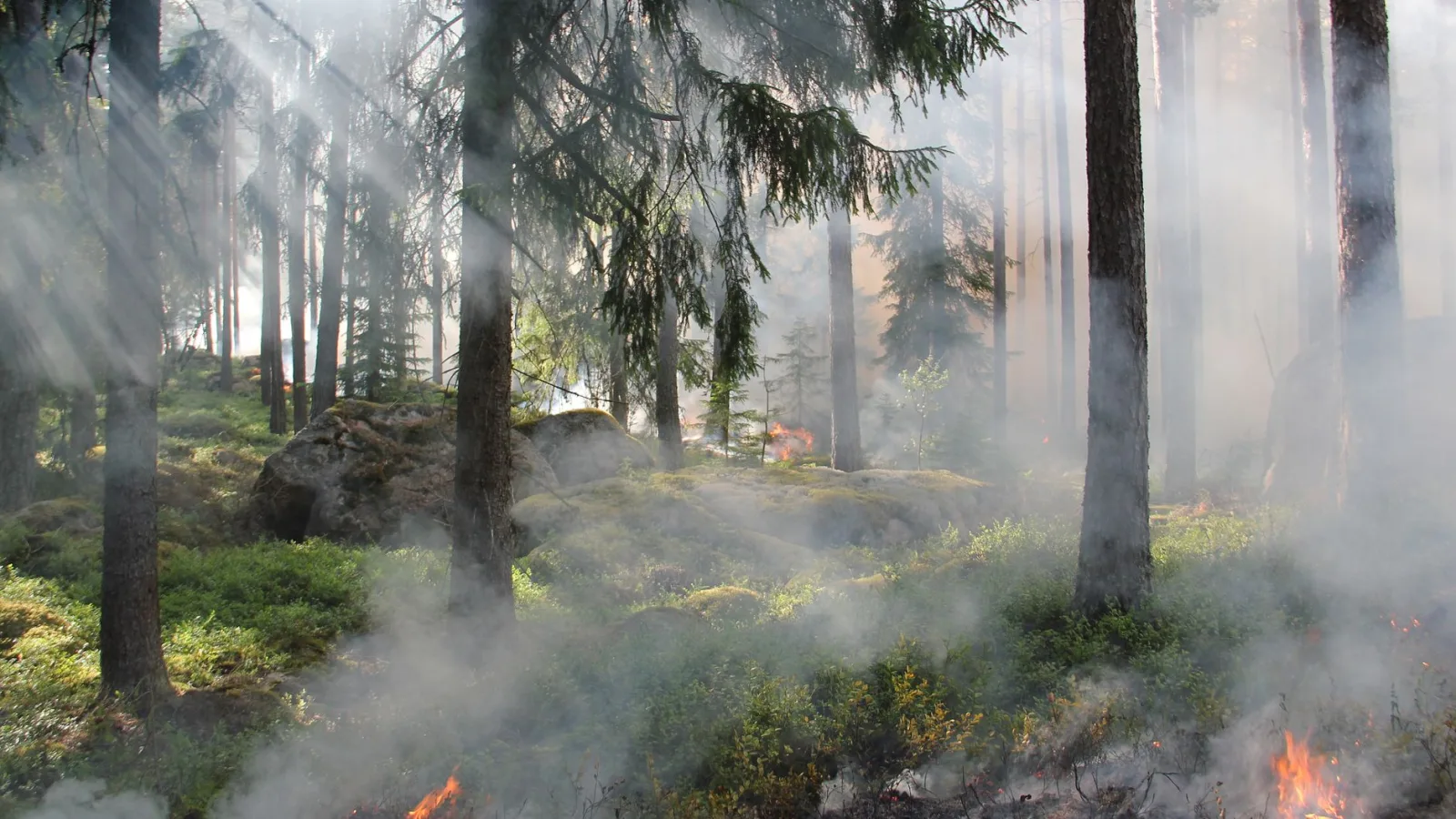
More than 10,000 people have been evacuated from towns and villages in southern France as a wildfire spreads through the foothills of the Pyrenees during a renewed spell of extreme summer heat.
The fire is centred around Trévillach, near Perpignan and close to the Spanish border. Local prefect Pierre Regnault de la Mothe said in a post on X that at least 4,600 hectares had burned, an area equivalent to more than 11,000 acres.
Residents in more than a dozen small communities have been ordered to leave as emergency services try to contain the blaze. The evacuation affects local households, holidaymakers and businesses in an area that is used to high summer tourism but is now facing restrictions, smoke and disruption to travel.
French Interior Minister Laurent Nunez warned on TF1 that conditions were worsening again, saying the firefighting effort was resuming under difficult circumstances. Authorities have also warned that strong winds could push flames further and make it harder for crews to secure the fire’s edges.
One resident from Trévillach, identified as Patrice, told the AFP news agency that the fire came within about 300 metres of homes. He said people were shocked by the speed of its spread and described the situation as close to panic.
The main immediate priority for authorities is public safety. Evacuation orders are intended to reduce the risk to residents and to keep roads clear for fire engines, medical teams and police. People in affected areas are usually asked to follow local instructions, avoid returning until permitted and keep phone lines and roads free for emergency use.
The fire has also disrupted the Tour de France. Spectators have been urged not to attend the end of the third stage on Monday so emergency vehicles can reach the area without delay. The stage starts in Granollers in Spain and is due to finish in Les Angles in the Pyrénées-Orientales region.
Tour organisers have asked fans and non-essential personnel to stay away from the final 40 kilometres of the route. They also said the motorcade of team vehicles that follows the race would be kept to a minimum. Race director Christian Prudhomme said an exceptional fire required exceptional measures and asked the public not to come to the roadside or finish area.
The request is significant because major sporting events can draw large roadside crowds, parked vehicles and support traffic. In a wildfire emergency, that can block access for crews, slow evacuations and make it harder for police to manage routes in and out of at-risk areas.
European Commission President Ursula von der Leyen said the EU would send four firefighting aircraft based in Cyprus and Sweden to support the emergency response. Cross-border support of this kind is commonly used when large fires stretch national firefighting capacity, particularly during periods when several countries are facing simultaneous heat and fire risks.
The fires in southern France come as neighbouring Spain also deals with wildfire damage. In Catalonia, more than 2,200 hectares in the Les Gavarres natural reserve have been destroyed. Catalan authorities said late on Saturday that the blaze was stable and was expected to be fully extinguished during the week, according to Reuters.
Further south, in Spain’s eastern Castellon province, around 500 people were evacuated after a wildfire entered the Sierra de Espadan national park. The incidents underline the wider regional pressure on emergency services as hot, dry and windy conditions increase the risk of fires starting and spreading quickly.
Temperatures are expected to remain a concern. Parts of Portugal and Spain have already recorded readings above 40C, while south-west France could again reach 40C this week. BBC Weather lead forecaster Matt Taylor said the latest heatwave was unlikely to break records in the same way as June’s, but would still be exceptional for the time of year.
He said that with heat expected to persist into next week and little widespread rain forecast, the risk of further wildfires would remain elevated. Prolonged heat dries vegetation, lowers soil moisture and can turn grass, scrub and woodland into fuel, especially when combined with wind.
France experienced a severe heatwave in June, when temperatures reached 42C in some areas. The country recorded its hottest average day nationwide on 24 June. Excess deaths were also recorded across parts of Europe during that period, including at least 2,025 in France, 1,222 in Belgium and about 480 in the Netherlands.
Scientists and climate agencies have repeatedly warned that Europe is becoming more exposed to severe heat. The Copernicus climate service says Europe is the fastest warming continent, heating at around twice the global average. That trend is associated with more frequent summer heatwaves, pressure on water supplies and more intense wildfire conditions.
For residents and visitors in southern France and north-eastern Spain, the practical message remains to follow official evacuation and travel advice, avoid fire-affected areas and allow emergency services clear access. With high temperatures and dry conditions continuing, authorities are likely to remain on alert even where individual fires are brought under control.