
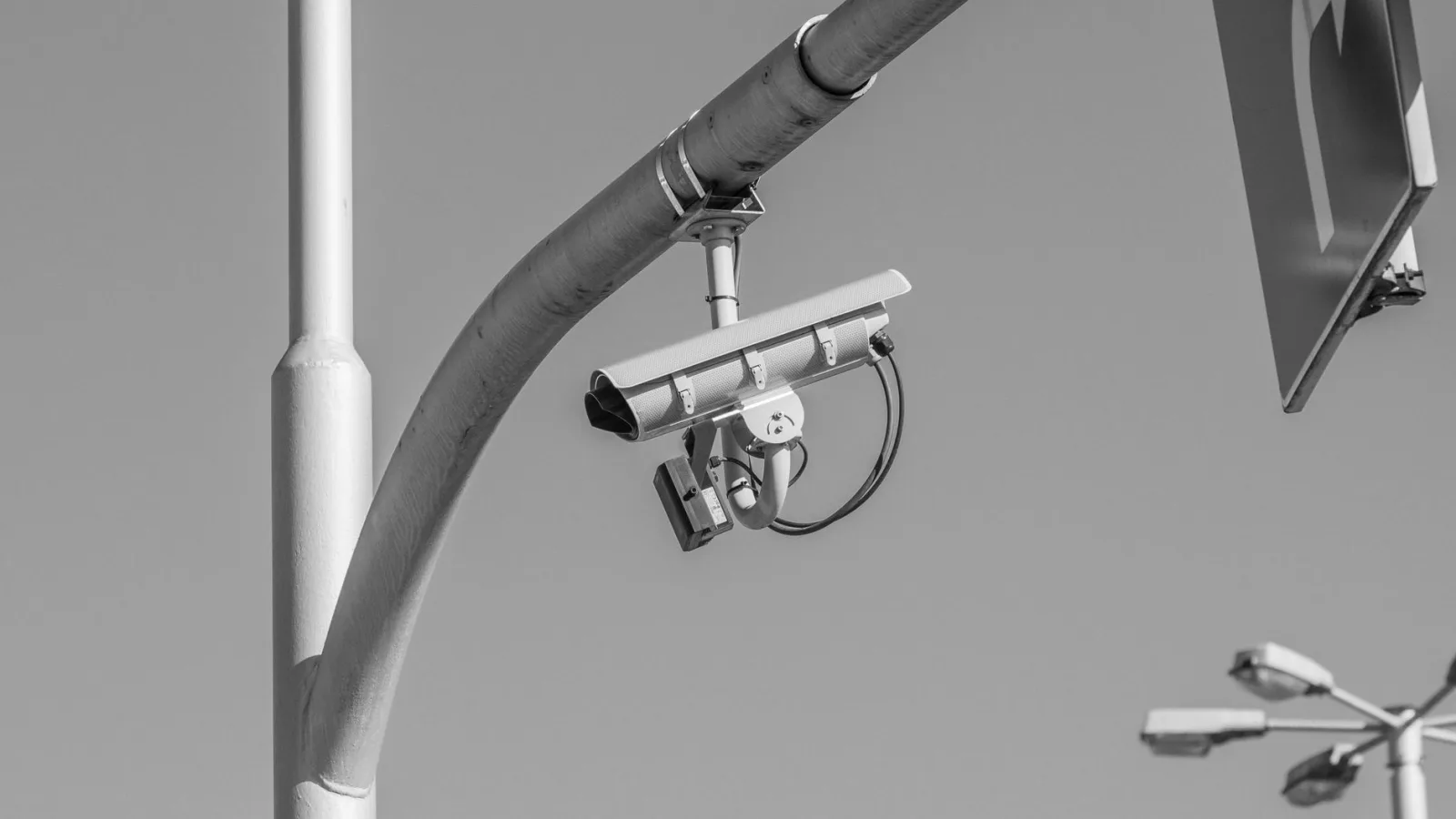
A California man has been arrested on suspicion of damaging automated licence plate reader cameras, in a case that highlights the growing tension in the US over police use of roadside vehicle surveillance technology.
The Monterey County Sheriff’s Office said Marcus Bee, 40, of Pismo Beach, was arrested after at least three Flock cameras were attacked in the communities of Lockwood and Bradley. Investigators allege the damage ran to thousands of dollars and affected equipment described by the sheriff’s office as public safety infrastructure.
The allegations have not been tested in court. According to the sheriff’s office, Bee was identified after other surveillance cameras in the area recorded activity linked to the damage, alongside other investigative work.
Flock cameras are automated licence plate readers, known in the US as ALPRs. They photograph passing vehicles and record details such as number plates, vehicle appearance and location data. Police can then search those records during investigations, for example when looking for a stolen car or trying to identify a vehicle linked to a serious offence.
The technology is similar in principle to automatic number plate recognition systems used in the UK, although the way it is bought, governed and challenged differs between countries. In the US, Flock systems have been adopted by thousands of police departments, private neighbourhoods and local authorities, creating large searchable networks of vehicle movements.
Monterey County Sheriff Tina Nieto said the cameras helped investigators with crimes including stolen vehicles, missing person cases and incidents involving suspect vehicles. The sheriff’s office also said the equipment was used for criminal investigations and was not intended to support immigration enforcement.
That assurance sits within a wider national debate. Privacy groups and civil liberties organisations have argued that licence plate reader networks can collect information about large numbers of people who are not suspected of wrongdoing. The American Civil Liberties Union has previously raised concerns about the scale of data gathered by ALPR systems, including location and vehicle details that may be retained even when there is no link to crime.
There have also been concerns about misuse. The Institute for Justice, a US civil liberties organisation, has reported cases in which police officers allegedly used law enforcement databases or surveillance tools to track romantic partners or personal acquaintances. Such claims have added to calls for stronger controls, audit trails and limits on who can search vehicle movement records.
Supporters of the cameras argue that they provide a practical investigative tool, particularly in areas where police resources are stretched. They say the systems can help locate stolen vehicles, identify cars connected to violent offences and support urgent searches for missing people. Flock’s chief executive, Garrett Langley, has also defended the legality of the company’s technology and has said its systems were used in large numbers of investigations across the US.
Critics take a different view, arguing that widespread vehicle scanning can amount to routine tracking of the public. Some opponents have claimed that the systems raise constitutional questions in the US, particularly around protection from unreasonable searches. Courts and lawmakers continue to face questions about how long such data should be held, who should have access to it and whether people should be able to find out when their vehicle has been logged.
The Monterey County case follows other reported incidents in which Flock cameras have been damaged or destroyed. Police in Georgia recently investigated attacks involving licence plate readers being set on fire, while authorities in Virginia have accused another man, Jeffrey Scott Sovern, of carrying out a series of attacks on ALPR cameras. In that case, he reportedly told a court he believed the technology was unconstitutional.
For the public, the issue is not only about vandalism or one company’s equipment. It is about how everyday journeys can become part of searchable data systems, and what safeguards exist when police, councils or private groups use that information. Damage to cameras may disrupt investigations, but the wider debate over surveillance, accountability and public trust is likely to continue as vehicle-tracking networks expand.