

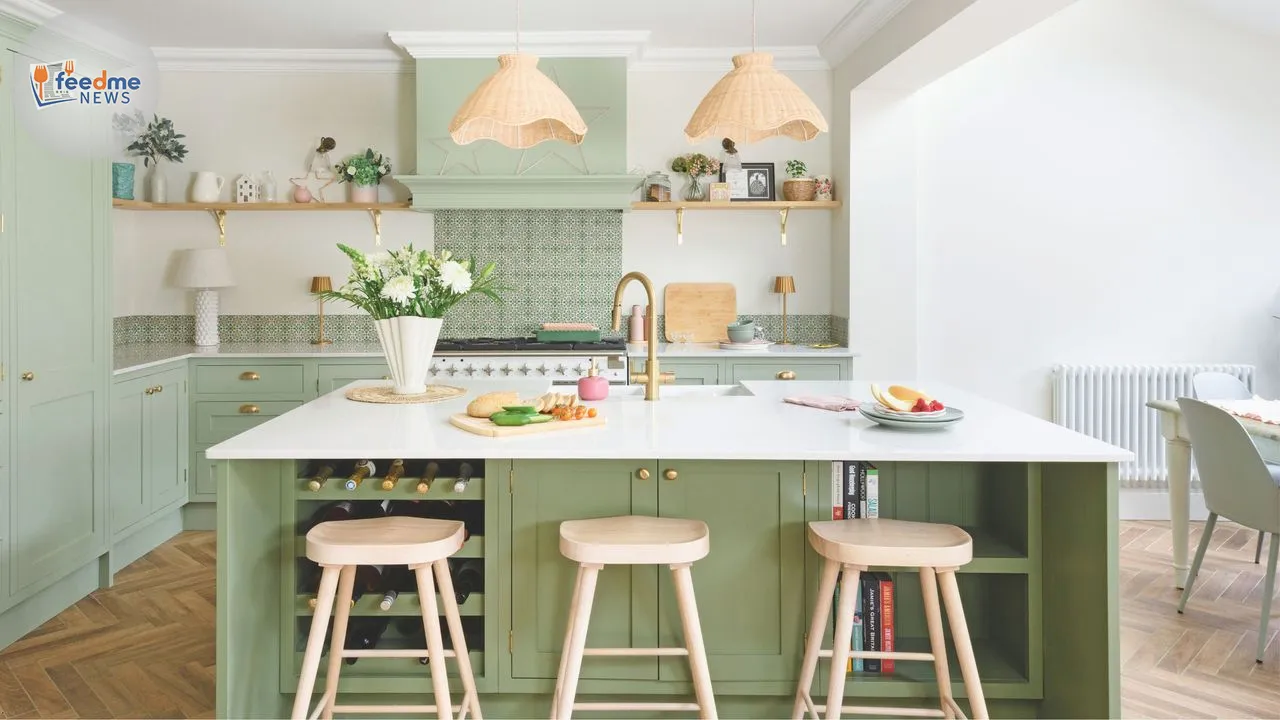
A softer style of kitchen lighting has moved into the spotlight in recent months, with fabric-shaded pendants appearing more often over kitchen islands in newly finished homes and design imagery. The look, long associated with dining rooms and living areas, is now crossing into hard?working kitchens where households want a warmer, more inviting atmosphere for cooking, eating and socialising. Designers describe the effect as calmer and more domestic than exposed bulbs or metal shades, with the fabric helping to diffuse glare.
This shift aligns with the broader move toward kitchens that function as everyday living spaces. Islands now double as preparation zones, homework stations and informal dining tables. Overhead pendants help define that hub and set the tone. While task lighting still matters for chopping and cleaning, the latest projects lean on layered schemes, combining focused light on worktops with softer, shaded fittings that create an evening glow.
(Image credit: Future PLC/Caroline Mardon)
Islands are reshaping lighting plans
Kitchen islands influence how households organise light. In open-plan rooms, a cluster or line of pendants can anchor the island visually and act like a beacon for social activities. The fittings do more than decorate; they signal where people gather. A pendant centred over the island often becomes the reference point for stools, place settings and circulation routes around work zones.
Designers typically treat islands as part of a layered scheme. Bright, directed light supports chopping and washing at the perimeters, while the island’s pendants dial back the intensity for conversation and dining. This balance reflects how people now use kitchens through the day, from bright, alert mornings to softer evenings. The shaded look sits within that pattern, reducing harsh contrast and creating more even, comfortable illumination for seated tasks.
Why fabric shades are gaining ground
Fabric shades change how light behaves. Instead of a tight beam, the woven surface scatters light in multiple directions, which can soften shadows and reduce glare at eye level. In simple terms, hard materials reflect and bounce light sharply, while a textile absorbs and releases it gently. For islands where people sit and talk, that gentler quality supports longer stays and makes surfaces appear less stark.
Colour temperature also plays a role. Many households now choose warmer white LEDs for living areas, often described as cosier than bluish, cooler tones. A shade can enhance that warmth by muting hotspots and spreading light more evenly. The effect differs from clear glass or metal, which tend to emphasise the bulb and reflect light strongly. In photographs of recent kitchen projects, the shaded route reads closer to a living room pendant than a task lamp, signalling the kitchen’s blended purpose.
Balancing ambience with function
Soft light helps mood, but kitchens still demand strong visibility for food preparation, cooking and cleaning. Projects that feature fabric-shaded pendants usually keep robust task lighting elsewhere: brighter fittings over sinks and hobs, under-cabinet strips for worktops, or ceiling-mounted lights that lift overall brightness when needed. The shaded pendants then operate as the ambient layer, often used on their own in the evening.
Building Regulations in England require energy?efficient fixed lighting in new homes and major refurbishments, which has accelerated adoption of LED sources across kitchens. LEDs pair well with shaded pendants because they run cooler than older technologies and offer dimming options compatible with layered lighting. In practice, this allows households to brighten task lights while keeping pendants lower for atmosphere, or to dim the whole scheme for dining without switching fittings off.
Practical realities in a working kitchen
Kitchens produce steam and airborne grease, which settle on nearby surfaces over time. Any pendant placed close to a hob or busy preparation zone will encounter more of this than one set back over seating. Project photos that showcase fabric shades typically show them positioned above the social side of the island rather than over cooking appliances. That separation aligns with the way modern islands divide roles: one half for cooking and cleaning, the other for serving and conversation.
Electrical and product safety rules also shape choices. Domestic lighting sold in the UK must comply with applicable electrical safety regulations and marking requirements. Kitchen projects must meet Part P of the Building Regulations in England and Wales, which covers electrical safety in dwellings. While these frameworks do not dictate decorative style, they influence the types of fittings and light sources used, the circuits they connect to, and how the overall system performs for efficiency and safety.
Style notes without the showroom gloss
Shaded pendants over islands appear in several forms. Simple drum shapes suit plain joinery and minimalist rooms. More elongated, linear shades echo the island’s form and spread light along its length. Pale, textured fabrics project a relaxed, natural feel; darker materials absorb more light and create a moodier setting over stools or a breakfast bar. In all cases, the textile softens the profile of a glowing bulb, which reads as a warm oval or band rather than a bright point.
This approach differs from the industrial and Scandinavian?influenced looks that dominated kitchen lighting for much of the past decade, where enamelled metal and bare filaments were common. The new wave pulls visual warmth into a space defined by hard surfaces such as stone, tile and steel. Wood grains, painted cabinetry and natural textiles often appear together in these rooms, so the pendant’s fabric shade forms part of a broader palette of softer finishes.
What this means
The rise of fabric?shaded pendants over kitchen islands signals how UK households now treat the kitchen as a shared living space. Lighting schemes mirror that shift, moving beyond uniform brightness to a mix of task and ambient layers. The shaded look offers atmosphere at seated height without the glare of exposed bulbs, while the rest of the room carries the workload for cooking and cleaning.
Regulation continues to push energy?efficient light sources, and LEDs support both function and mood with dimming and consistent colour. As kitchens absorb more family and social time, fittings that once belonged to dining rooms now feel at home over islands, marking a subtle but clear change in how people light the heart of the house.
When and where
Reported by Ideal Home on 5 February 2026, highlighting the use of fabric?shaded pendants over kitchen islands to create a warm, inviting atmosphere in contemporary UK kitchens.
In the months ahead, this gentler style of kitchen lighting looks set to spread across mid?range refits and open?plan extensions, where households value a calmer tone without sacrificing day?to?day function. The approach sits neatly with long?term efficiency goals and regulatory frameworks that favour LED sources. For the housing sector, it reflects a maturing view of the kitchen as both workshop and lounge, and a continued push to integrate comfort into the most used room in the home.