

Europe’s political leaders are moving away from their cautious approach towards President Donald Trump after he renewed demands that the United States should take control of Greenland, framing the issue as a matter of national security.
Speaking earlier this week, President Trump reiterated that the US “has to have” Greenland and suggested that European governments would ultimately avoid resisting Washington’s position. His remarks come ahead of meetings with European leaders at the World Economic Forum in Davos, where the issue is expected to feature prominently in private discussions.
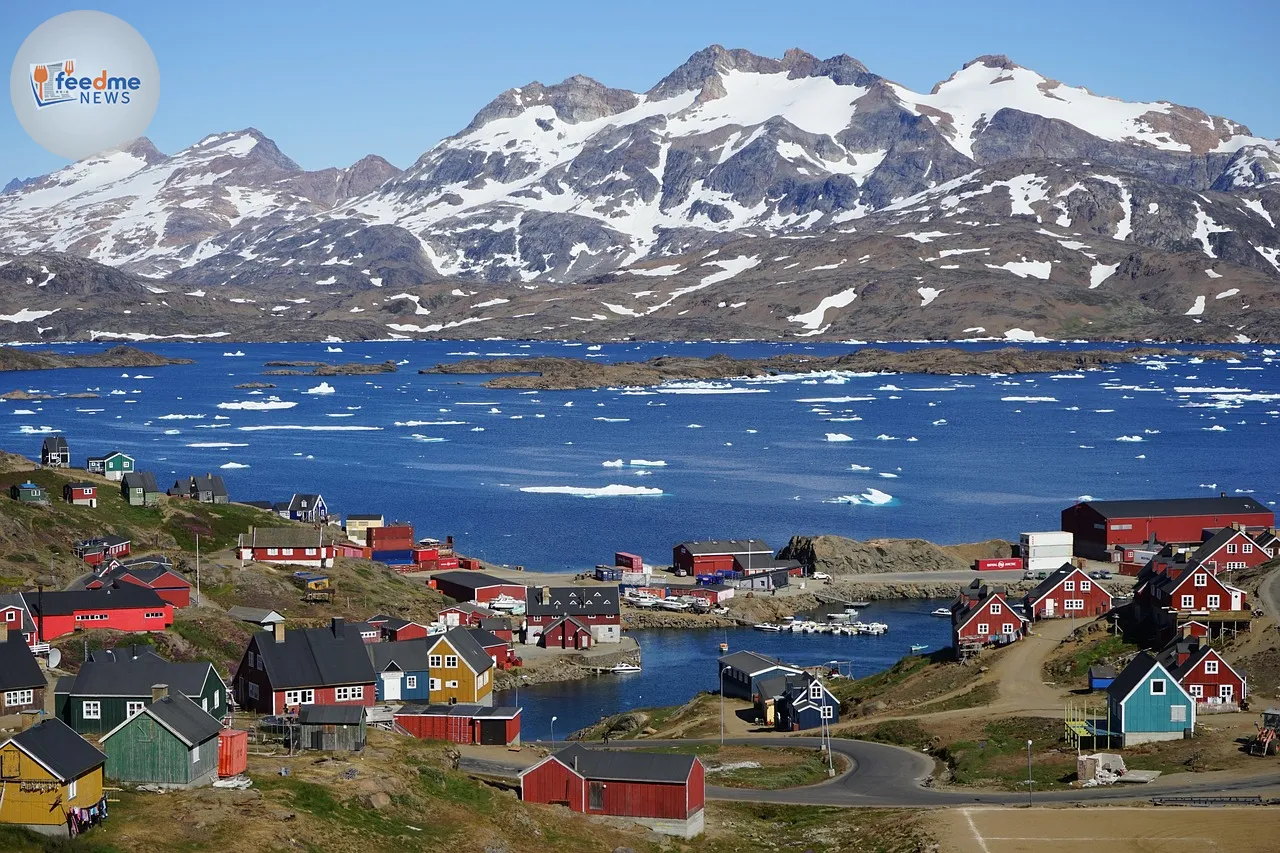
Greenland is a semi-autonomous territory within the Kingdom of Denmark. Denmark is both a member of the European Union and the North Atlantic Treaty Organization, placing the island at the centre of existing transatlantic security arrangements. Trump’s comments have raised concerns across Europe that Washington is prepared to pressure allies to abandon Denmark’s position or face economic consequences.
Tariff threats sharpen European response
According to European officials, the US president has signalled that allies could face punitive tariffs on exports to the United States if they continue to support Danish sovereignty over Greenland. Such a move would pose a serious risk to European economies already under strain, particularly export-dependent sectors such as Germany’s automotive industry and Italy’s luxury goods producers.
European leaders reacted sharply. Germany’s finance minister said the country would not submit to economic pressure following emergency talks with French counterparts. France’s finance minister described the threat of tariffs being used as a geopolitical tool against long-standing allies as unprecedented in modern transatlantic relations.
The rhetoric marked a clear shift from Europe’s earlier strategy of managing relations with Trump through cautious diplomacy since his return to office. Officials now acknowledge that approach may no longer be sufficient.
A coordinated but cautious strategy
Despite the growing tension, European governments are not seeking an outright confrontation. Diplomats say the EU intends to balance engagement with deterrence, signalling a willingness to support enhanced Arctic security cooperation while making clear that unilateral action over Greenland would trigger consequences.
European officials have indicated that the EU could respond by imposing tariffs on US goods or restricting access for American companies to the bloc’s single market. Such measures would also affect US consumers, given the scale of European investment and employment across the United States.
The EU remains one of the world’s largest trading powers, accounting for a significant share of global trade in goods and services. While its foreign policy voice is often fragmented, trade policy is largely coordinated through the European Commission, giving Brussels leverage in economic disputes.
EU representatives have stressed that their priority remains dialogue rather than escalation, but analysts say the political context has changed. The dispute is no longer viewed solely through an economic lens but increasingly as a security and sovereignty issue.
Security concerns complicate Europe’s position
Europe’s response is constrained by its reliance on the United States for security, particularly in relation to Ukraine and broader NATO defence commitments. Despite increased defence spending pledges, many European governments acknowledge they remain dependent on US military support.
UK Prime Minister Sir Keir Starmer underlined this reality while reaffirming support for Danish and Greenlandic sovereignty. He emphasised that maintaining strong defence and intelligence ties with Washington remains in the UK’s national interest, particularly in relation to nuclear deterrence and collective security.
This dependence has fuelled internal debate within Europe over how far governments can push back against US pressure without weakening transatlantic security guarantees.
Wider implications for global institutions
The Greenland dispute has also intensified concerns about the future of multilateral institutions. President Trump has shown scepticism towards organisations such as NATO and the United Nations, arguing they no longer reflect current global realities.
Attention has focused on a proposed “Board of Peace” that the US president is reportedly seeking to establish, with a signing ceremony planned during the Davos meetings. The initiative is described as a new international peace-building body, initially linked to post-conflict reconstruction in Gaza but potentially extending beyond that remit.
France has indicated it will not participate, citing concerns that the proposal could undermine the principles and structure of the United Nations. Russia has confirmed it was invited to join, raising further questions among European policymakers about the initiative’s objectives and governance.
Analysts warn that attempts to bypass established institutions risk weakening existing frameworks without providing viable alternatives.
Europe weighs unity against domestic pressures
Public opinion adds another layer of complexity. Polling suggests most Americans oppose purchasing Greenland or pursuing military control of the island. European governments, including Denmark, have been lobbying US lawmakers to reinforce support for Greenlandic self-determination.
At the same time, European leaders face domestic economic pressures. A prolonged trade dispute with the United States would have direct consequences for voters, making sustained unity difficult to maintain.
Despite the strain, diplomatic channels remain open. Trump continues to speak with European leaders, and officials on both sides stress that relations, while damaged, are not broken.
The challenge for Europe is maintaining a unified stance long enough to influence Washington’s calculations, while balancing economic interests, security dependencies, and internal political constraints.
What this means
The dispute over Greenland has become a broader test of Europe’s willingness to defend allied sovereignty under pressure from the United States. While European leaders remain committed to dialogue, the shift in tone reflects growing concern that economic and security issues are becoming increasingly intertwined. How Europe responds may shape not only transatlantic relations, but also the future role of multilateral institutions in managing global security and trade.
When and where: The developments relate to transatlantic relations and Greenland’s status, reported in January 2026 by international political and economic reporting sources.