

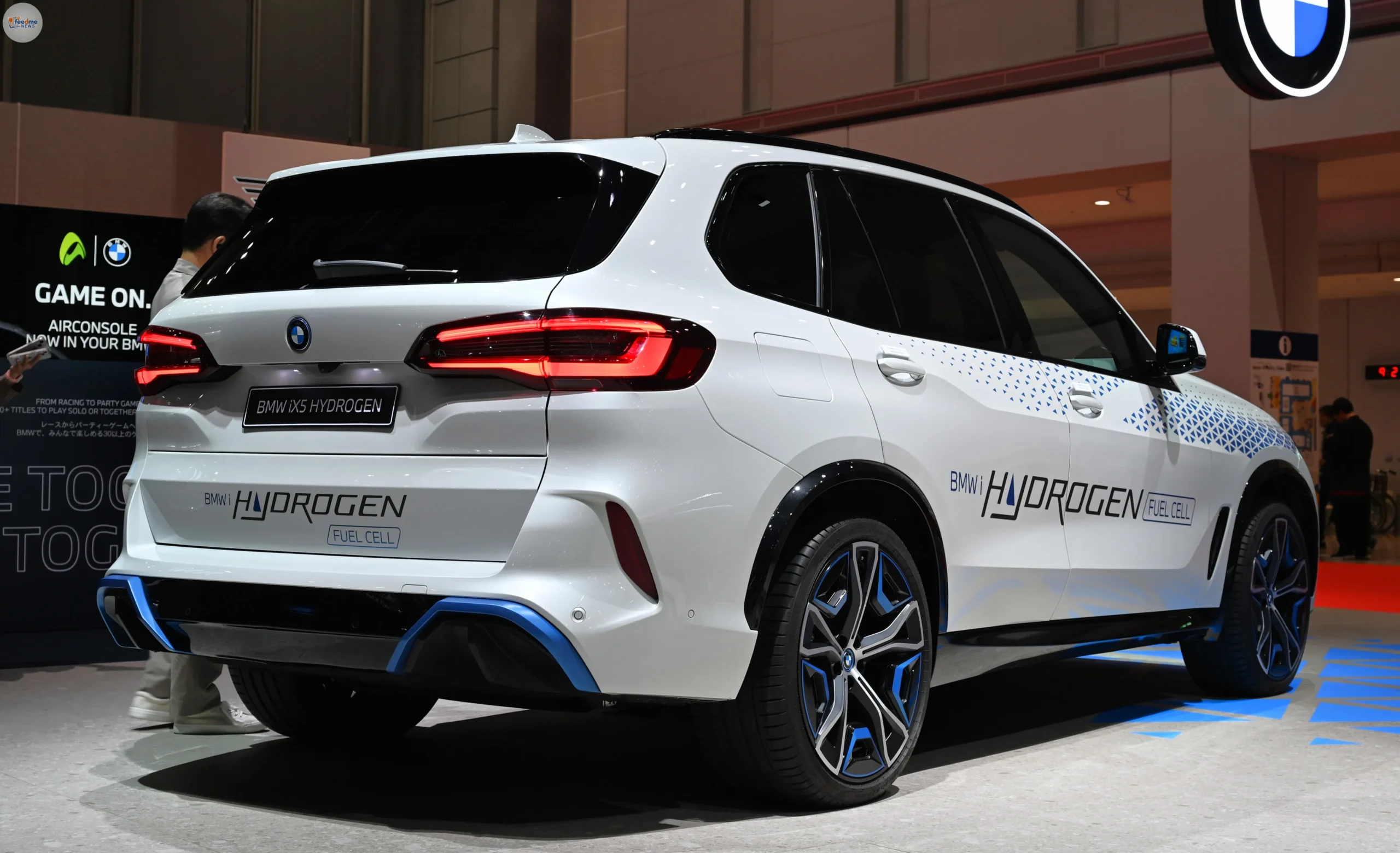
BMW says hydrogen power still has a road ahead. The company signalled a fresh push into fuel-cell vehicles, outlining plans to bring a hydrogen-powered iX5 SUV to production in 2028. It promises a space-saving fuel cell system and up to 385 miles of emissions-free driving, placing a bold claim on a technology many assumed had lost ground to battery-only models. The move puts BMW at the centre of a debate that goes beyond car choice. It touches energy policy, refuelling infrastructure, climate targets, and how fast consumers can shift to cleaner transport. If BMW delivers, drivers could see a new kind of long-range, fast-refuelling zero-emissions vehicle. But the route from prototype to showroom runs through infrastructure gaps and a tough policy landscape that will decide who can drive one—and where.
A different path to zero emissions
BMW’s iX5 Hydrogen takes a path separate from mainstream electric cars. Instead of storing energy only in a large battery, the vehicle makes its own electricity onboard. A fuel cell combines hydrogen with oxygen to generate power, leaving only water vapour at the tailpipe. That allows a lighter energy store than many long-range battery packs and enables quick refuelling with compressed hydrogen. BMW frames the design as space-efficient, aiming to preserve cabin and cargo room while offering familiar SUV utility.
The company’s choice signals a bet on choice itself. Battery-electric vehicles dominate new zero-emission sales, yet they come with well-known trade-offs: long charging times on some trips, public charging that can be uneven, and range loss in cold weather. Fuel-cell cars address some of those concerns by refuelling in minutes and maintaining range across seasons. BMW has tested the iX5 Hydrogen as a pilot fleet in recent years. Moving to a production model in 2028 would shift the technology from trial to consumer option, if the company can find the right markets.
The infrastructure question that could make or break it
Hydrogen cars live or die by the pump network. Today, refuelling stations for passenger cars remain scarce and clustered. Germany has a small but established set of public hydrogen sites. Japan has backed the technology for years. Parts of California host stations, with a patchy service record that has frustrated drivers. Many regions have no public hydrogen pumps at all. As with early battery charging, the business case for new stations can be hard to close until enough cars exist to use them.
BMW’s 2028 timeline buys time for infrastructure to catch up, but it does not guarantee it. Governments in Europe and the United States have pledged support for hydrogen in freight, industry, and shipping. Heavy trucks and buses are expected to anchor many new stations. That backbone could help passenger cars piggyback on shared supply. Yet operators must build, permit, and maintain high-pressure sites that meet strict safety codes. Without clear, long-term demand signals, investors may hesitate. For drivers, the core question remains simple: Will a local pump be open when they need it?
Climate math: how hydrogen is made will decide its value
Hydrogen can be clean or dirty, depending on how it is produced. If renewable electricity splits water into hydrogen and oxygen, the result can be close to zero-carbon across its lifecycle. If natural gas produces the hydrogen without strong carbon capture, the climate benefit shrinks fast. BMW describes the iX5 Hydrogen as offering emissions-free driving at the tailpipe, which is accurate for what comes out of the car. But climate targets look at the full chain from energy source to wheel.
Policy now leans into this distinction. Europe sets rules that reward “renewable fuels of non-biological origin,” a category that includes green hydrogen. The United States has created tax credits for low-carbon hydrogen that meets strict emissions thresholds. These incentives aim to make clean hydrogen cheaper and more plentiful over the next few years. For consumers, this matters: a fuel-cell car only makes sense as a climate solution if the fuel supply is clean and dependable. BMW’s 2028 schedule lines up with the period when new projects are due to spin up.
Efficiency trade-offs and where hydrogen fits best
Energy efficiency still favours battery-electric cars for most light-duty trips. Converting electricity to hydrogen, compressing it, moving it, and turning it back into electricity in a fuel cell loses more energy than sending power straight to a battery. That math has kept hydrogen on the edges of the passenger market. Proponents counter that not every use case looks the same. Fleet duty cycles, extreme climates, heavy towing, and drivers without home charging can tilt decisions.
BMW appears to see hydrogen as a complement, not a replacement. Its battery models continue to anchor its electrification strategy. A hydrogen SUV adds optionality where it could make practical sense, including long-distance travel with fast refuelling. Other carmakers offer a signal here as well. Toyota’s Mirai and Hyundai’s Nexo show that a small passenger-car market exists when stations do. The bigger bet, for now, remains in heavy-duty transport, where downtime is expensive and load limits matter. If that network expands, it could lower barriers for a passenger model like the iX5.
Safety, standards, and the path to approval
Hydrogen’s image often turns on safety. Modern systems use robust carbon-fibre tanks, high-precision valves, and multiple layers of monitoring. International standards govern fuel purity and hardware to keep fuel cells performing as designed. Regulators also require strict crash testing and leak detection before a vehicle reaches the road. BMW’s claim of a space-saving fuel cell suggests careful packaging of tanks and components to protect passenger space and meet safety rules.
The fuel itself requires specific handling. Stations must compress hydrogen to very high pressures and cool it during fills. That adds cost and complexity, but the industry has built and operated such sites for years in select markets. For drivers, the experience aims to feel familiar: pull up, connect, refuel in minutes, and go. The difference sits behind the nozzle, where engineering and safety compliance do the heavy lifting. Any rollout will depend on reliable station uptime, clear labelling, and staff training to build trust.
What drivers should watch between now and 2028
A production date four model years away gives consumers time to assess the basics. Watch where stations open and who funds them. Track how often stations stay online and how quickly they fix issues. Look for clear guarantees about fuel quality and pricing. Pay attention to how clean the hydrogen supply becomes in your region as new plants switch on. And consider the total cost of ownership: insurance, maintenance, and fuel costs will need to compete with both petrol and battery-electric options.
BMW’s move may also nudge policymakers. If a major brand brings a hydrogen SUV to market, rules on incentives, parking access, and zero-emission mandates may need updates to treat fuel-cell cars fairly alongside battery EVs. City leaders will decide whether to include hydrogen pumps in their urban plans and how to balance limited space with many clean-transport needs. Those choices, more than any single vehicle, will shape whether hydrogen cars find a foothold.
BMW’s 2028 target for the iX5 Hydrogen puts a clear marker down: the company is not ready to write off fuel cells for everyday driving. A claimed 385-mile range and a compact fuel cell system point to a practical vehicle, not only a technology demo. Yet the hurdles remain plain. Hydrogen supply must be clean to meet climate goals. Refuelling stations must be reliable and within reach. Policy must bridge early markets to wider use. Over the next two years, real-world station build-outs, fuel pricing, and clean-hydrogen projects will show whether this bet brings drivers a new choice; or stays a niche for specific routes and fleets. For now, the message is simple: hydrogen is not dead, but it still has to prove it can live on your street.