

Hannah Spencer, the newly elected Green Party MP for Gorton and Denton, has issued a blunt warning about the gap between Westminster and daily life across the country. In a column published Friday, April 3, 2026, in the Guardian, she described Parliament as “a bubble” and argued that “most politicians have no clue how tough things are out there.” Spencer, a former plumber, said she moved from fixing pipes to the green benches only six weeks ago and called the shift “a culture shock.” She framed her experience as proof that too few MPs share the realities of ordinary work and bills. She also challenged Labour, saying it “lacks the imagination, boldness and will” to tackle the cost-of-living crisis that continues to squeeze families. Her remarks spotlight a wider debate about who represents working-class voices in British politics and how quickly leaders will act on hardship that many voters say still feels acute.
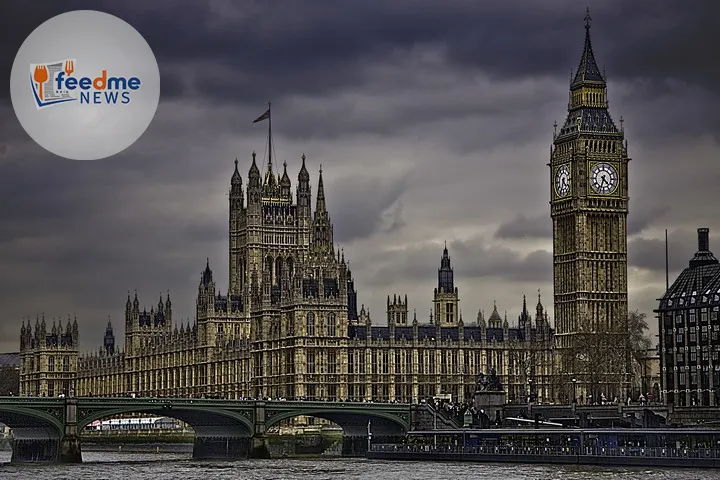
Spencer sits in the House of Commons at Westminster in London, representing Gorton and Denton. She adds a fresh voice to a long-running national discussion about inflation, energy bills, housing costs, and political representation.
From Tool Bag to Green Bench: A New MP’s Culture Shock
Spencer used her personal story to make a broader point about Parliament’s distance from daily life. “Six weeks ago, I was doing what I’ve always done – working as a plumber in people’s houses,” she wrote, adding that “to call it a culture shock would be an understatement.” She argued that Westminster feels insulated from the pressures facing many households. “This place is a bubble,” she said, stressing that “there just aren’t enough of us here who get it, who come from working-class backgrounds, who’ve had ordinary jobs like me.”
Her remarks land at a time when analysts and campaigners continue to question who makes and shapes policy. Over several parliaments, research by the Sutton Trust has found MPs are more likely than the public to have attended private schools, a trend that feeds concerns about access and perspective. Social scientists have long argued that descriptive representation (the presence of people with similar life experiences in decision-making) can shape debate, priorities, and the speed of reform.
Inside the Cost-of-Living Crunch Driving Her Warning
Spencer’s criticism builds on a stark backdrop. The UK’s cost-of-living crisis surged after the pandemic and the energy shock that followed Russia’s invasion of Ukraine. Consumer price inflation in Britain hit 11.1% in October 2022, the highest rate in four decades, according to the Office for National Statistics. Food prices rose faster still, with food inflation peaking at almost 19% in early 2023. Monthly bills improved as headline inflation fell, but many families still felt the pinch from higher rents, persistent grocery costs, and arrears.
Poverty groups captured the social toll during those spikes. The Joseph Rowntree Foundation reported a sharp rise in “destitution” (people unable to afford basics such as food, heat, or hygiene) in 2022, counting millions of affected adults and children. Energy regulators also noted record levels of unpaid energy bills in 2023 as households struggled to catch up. Food bank networks, including the Trussell Trust, reported unprecedented demand over recent years. Against that picture, Spencer’s comments echo what many charities hear: lower inflation does not erase the damage done by years of rising costs.
A Direct Shot at Labour’s Caution
Spencer targeted Labour’s approach with unusual directness for a newly elected MP, arguing that current proposals fall short of what many households need. She acknowledged that recent policy announcements suggest movement on key issues, but said they do not go far enough to ease the pressure on families facing rising bills and reduced financial resilience.
Her criticism focused on what she described as a lack of urgency and ambition. While some measures have been introduced or proposed, she suggested that they are reactive rather than transformative. In her view, the scale of the cost-of-living challenges requires more decisive intervention, particularly in areas such as energy pricing, welfare support, and essential household costs.
This position reflects a broader debate within Parliament about how far government should go in supporting households during periods of economic strain. Some policymakers favour targeted support to limit public spending, while others argue for wider measures to stabilise living standards across the population.
Representation and Lived Experience in Westminster
Spencer’s remarks also bring renewed attention to the composition of Parliament itself. Questions about representation are not new, but they have become more prominent during periods of economic pressure, when policy decisions have immediate and visible effects on daily life.
Her argument centres on the idea that lived experience can shape political priorities. MPs who have worked in trades, public services, or lower-income roles may approach policy differently from those with more traditional political or professional backgrounds. This does not automatically determine policy outcomes, but it can influence how problems are framed and which solutions are prioritised.
The discussion links to long-standing research into social mobility and political access. Studies have shown that certain professions and educational backgrounds remain overrepresented in Parliament, raising ongoing questions about how closely political institutions reflect the wider population.
The Broader Economic Context
The concerns raised by Spencer sit within a wider economic environment that has been challenging for several years. While inflation has moderated from its peak, the cumulative effect of higher prices continues to shape household finances.
Energy costs remain a significant factor, with price volatility affecting both direct bills and wider supply chains. Housing costs, including rent and mortgage payments, continue to place pressure on budgets, particularly in urban areas. At the same time, wage growth has not consistently kept pace with earlier price increases, leaving many households with reduced purchasing power.
This combination has contributed to a sense of ongoing financial instability for some families, even as headline economic indicators show improvement. For policymakers, the challenge is balancing fiscal constraints with the need to address these longer-term pressures.
What This Means
Spencer’s comments highlight a continuing tension between political decision-making and everyday experience. While economic conditions have shifted since the height of the cost-of-living crisis, many of the underlying pressures remain in place for households across the country.
The debate now centres on how effectively policy can respond to those realities. Questions about affordability, representation, and the pace of reform are likely to remain central as governments consider the next phase of economic and social policy.
Her intervention adds to a broader conversation about whether current approaches are sufficient, and how closely political institutions reflect the lives of the people they represent.