

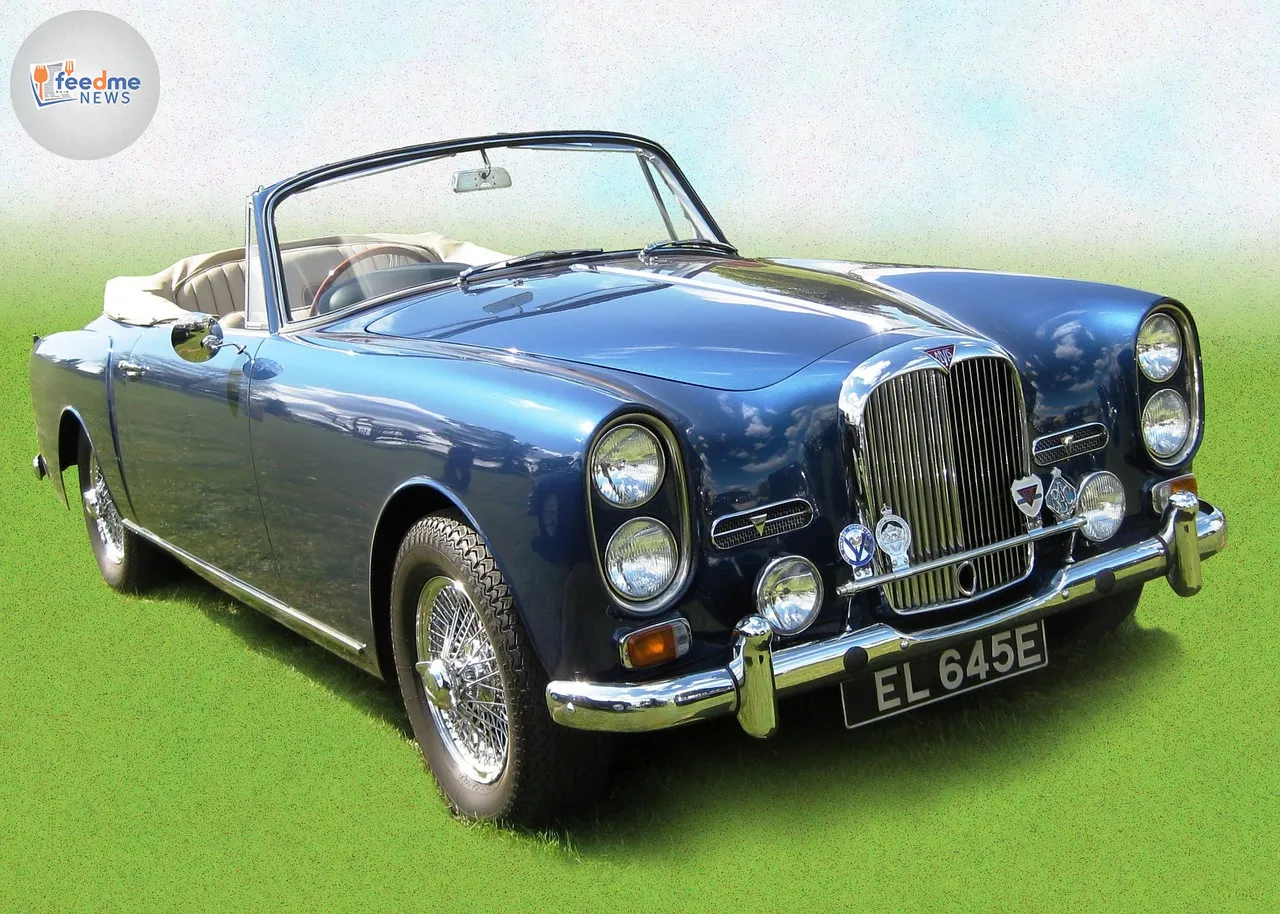
Alvis, one of Britain’s historic car makers, continues to build and restore cars to original 1930s and 1940s specifications while meeting modern standards. From its base in Kenilworth, in the West Midlands, the company runs a continuation programme that creates new cars from original blueprints and maintains an extensive archive of parts and records. Under owner Alan Stote, who has led the business for more than 30 years, Alvis handles 150 to 200 vehicles a year in its workshop and offers new builds priced at around £325,000. These continuation cars use period-correct straight-six engines and classic body styles, supported by carefully selected modern components to meet today’s emissions testing. For buyers and owners, the operation provides a rare mix of provenance, service support, and the option to own a new vehicle built to authentic pre-war designs.
This activity takes place in Kenilworth, Warwickshire, within Britain’s traditional automotive heartland. Alvis began passenger car production in the early 20th century and closed its original car line in 1968. The business later transferred its passenger division to a consortium of former workers and now focuses on restoration, servicing, parts supply and continuation builds at the same site.
Heritage engineering returns to the line
Alvis builds continuation models that follow the firm’s original drawings, with a choice of “half a dozen” bodystyles and either 3.0- or 4.3-litre six-cylinder engines. A continuation car is a newly constructed vehicle produced to historic specifications, using period-style components and methods. At Alvis, the company offers two routes: a new-build car with a modern registration, or a restoration that revives an original chassis to deliver a freshly built vehicle wearing its original number plate.
While these cars adhere to their era in engine layout and styling, Alvis fits discreet modern equipment to support legal compliance and daily usability. The firm specifies a Tremec gearbox, a modern manual transmission known for its robust shift quality, along with other updates that help the cars meet emissions testing. This approach aims to preserve the look and feel of a pre-war vehicle while enabling road use under current regulations.
Archive, parts, and provenance: how owners benefit
Alvis holds original blueprints, ownership records and an extensive stock of period-correct parts. That archive allows customers to trace a car’s life from new. “Customers will say ‘I’ve just bought this Alvis’, bring it to us, and we will give them a complete printout of the car’s history from when it was new,” Stote said. The firm’s records include correspondence from notable past owners, reinforcing provenance for collectors and families who keep cars across generations.
The workshop processes between 150 and 200 vehicles each year, often from long-term keepers. “Quite a lot of people hang onto them. They were bought by those who were interested in cars rather than just a mode of transport,” Stote said. He described owners who arrive with “several boxes and a ladder chassis frame”, sometimes seeking to make good on a decades-old promise to get a car on the road for a family event. A ladder chassis is a simple, strong frame that looks like a ladder and formed the basis of many early cars; it lends itself to repair and rebuild work, which suits restorations of this age.
From 1920s innovation to today’s workshop
Before its car line closed, Alvis developed features that later became common in modern cars. The company adopted synchromesh gears, which use friction rings to match gear speeds for smoother shifts. It also used independent front suspension, where each front wheel moves on its own without a solid axle, improving ride and steering. Alvis even campaigned a front-wheel-drive grand prix racer in the 1920s, an era when rear-wheel drive dominated top-level motorsport.
Alvis ended passenger car production in 1968 after making around 22,000 cars across 49 years. Just under 5,000 of those vehicles remain. With continuation builds and restoration work, the company expects the number of running cars to climb gradually. Stote reflects on shifting attitudes: “Back then, there were no car collectors as such. If you had an old car, you were either poor or eccentric – those were the two criteria. Alvis wouldn’t have imagined that its passenger division would need to last any more than 10 years.”
Build process and local supply chain
Rebuilding or constructing one of these cars takes up to 5,000 hours, according to Alvis. The business sources or fabricates almost all parts locally. “We’re in the heart of the UK automotive industry, after all,” Stote said. The region’s long-standing network of tooling, coachbuilding, machining and specialist suppliers supports the restoration and recreation of complex vintage components.
Buyer involvement forms part of the process. “Part of the pleasure for buyers is the journey of their build,” Stote said. “They can come and see it, sit in it and be part of it. And they know the final car is unique to them.” For those commissioning a continuation model, Alvis offers period-authentic coachwork designs and traditional straight-six engines, paired with modern transmission hardware to improve reliability and help the car meet current test standards. Historically, Autocar recorded a 0–60mph time of 11.3 seconds in 1938 for an Alvis Super Tourer, an example of the performance these cars delivered in period; today’s cars aim to mirror that character within modern legal frameworks.
A niche sustained by records and resources
The company’s store of original drawings and ownership files underpins its continuation and restoration work. Owners can verify build details and provenance directly from factory documents, a service that can support valuations, insurance, and historical accuracy. This level of documentation is unusual and valuable in the vintage and classic car world, where tracing changes across many decades can be difficult without factory records.
With fewer than 5,000 original Alvis cars remaining, the marque’s output serves a small, dedicated segment. The workshop’s capacity—150 to 200 cars per year—shows steady activity despite the narrow focus. For customers, the availability of parts, expert labour, and detailed records reduces risk when restoring or buying a heritage car. For the region, the work sustains specialist skills that form part of the UK’s broader automotive ecosystem.
What this means
For owners and buyers of historic vehicles, Alvis offers two clear paths: commission a new-build continuation car to period specification with modern registration, or revive an original chassis to return a car to the road with its original plate. In both cases, the company’s archive and records provide documented provenance and technical continuity. The approach allows historic designs to remain in active use while complying with present day regulatory requirements. For the marque, it preserves manufacturing methods and engineering knowledge that would otherwise be lost; for owners, it offers a defined route to maintaining, rebuilding, or commissioning vehicles that remain closely aligned with Alvis’s original passenger car output.
When and where
Details in this report reflect information published by Autocar on 8 February 2026, following a visit to Alvis’s Kenilworth facilities in the West Midlands.